
Short answer: You can usually replace a garage door bottom seal yourself: measure the door, match the seal type to the metal retainer on the bottom edge, slide out the old seal, slide in the new one, and trim it to length. A gap under the whole door usually means a worn seal. A gap on one side, or a gap that comes back after a new seal, means the door itself is off, with worn rollers, a stretched cable, or a bent track.
Charlotte’s first hard freeze is a good reminder to check the bottom of the garage door. Cold drafts, blowing leaves, rainwater, and mice all find their way under a door with a worn seal, and many homeowners are not sure whether the problem is a small part or something bigger. This guide covers how to tell, how to swap a basic seal, and when the gap means a technician should look at the door. If you would rather have us check it, our garage door repair page explains how a visit works.
How many freezing nights does Charlotte get? Average days per month at 32°F or colder
Thirty-year average number of days each month when the overnight low reaches 32°F or below.
Bars start at zero. Measured at Charlotte Douglas International Airport, so conditions at your address can differ. Source: NOAA National Centers for Environmental Information, 1991-2020 U.S. Climate Normals, Charlotte Douglas AP (USW00013881), monthly days with minimum temperature at or below 32°F (see also the U.S. Climate Normals program page).
How to Tell If the Seal Is the Problem
Check these things first, in this order:
- Daylight test. Close the door, turn off the garage lights, and look at the bottom edge from inside. Light along the whole width points to a worn seal. Light on one side only points to a door that is not level.
- Visual check. The seal should be soft, flexible, and unbroken. A seal that is flattened, cracked, brittle, torn, or pulling out of its channel is done.
- Floor check. Look at the concrete under the door. A dip, crack, or a slab that has settled can leave a gap that no seal will close.
- Debris check. Leaves, dust, or water stains inside the door line show where the seal is failing.
What the gap under your door is telling you
Do the daylight test, then match the pattern.
Replace the seal
Call a technician
Check the floor and door
Illustrations are simplified. This is a diagnostic guide based on the daylight test described above, not statistics. Do not adjust springs, cables or track brackets yourself.
Types of Garage Door Bottom Seals
Garage door seals come in a few common shapes. The shape you need depends on the retainer, the metal channel along the bottom of your door.
- T-end (or bulb-end) seal. The ends have a T shape that slides into a double-channel retainer. This is common on residential doors.
- Bead end seal. The ends have a round bead and slide into a single-channel retainer.
- J-style seal. Has a J-shaped profile and often sits in a retainer on the bottom edge.
- Threshold seal. A rubber or vinyl strip glued or screwed to the garage floor. The door closes onto it. It is an addition for gaps caused by an uneven slab, and it does not replace the seal on the door.
The bottom edge of your door will tell you which retainer you have. Many hardware stores sell seals by the retainer type, and bringing a small piece of the old seal makes matching easy.
How to Replace a Garage Door Bottom Seal
For a basic seal on a door that is otherwise straight, this is a simple job. Work with the door fully closed, and keep your hands clear of the hinges and sections.
- Measure. Measure the door’s width and note the retainer type. Buy a seal a little longer than the door, because you will trim it.
- Remove the old seal. Slide it out of the channel from one end. Work gently. A brittle old seal may break, and a stubborn one can be pulled with pliers.
- Clean the channel. Wipe out dirt, grit, and old rubber with a rag.
- Lubricate. A light spray of silicone makes the new seal slide in more easily. Skip oily lubricants that can damage rubber.
- Feed in the new seal. Start at one end and slide it along the channel. Cold vinyl stiffens, so on a freezing day let the seal warm up indoors first.
- Trim. Cut the seal flush with the door edge using a utility knife, or leave a small bit extra and fold it under.
- Test. Check for light under the closed door, then run the door a few times and make sure the seal is not binding.
When the Gap Means Something Bigger
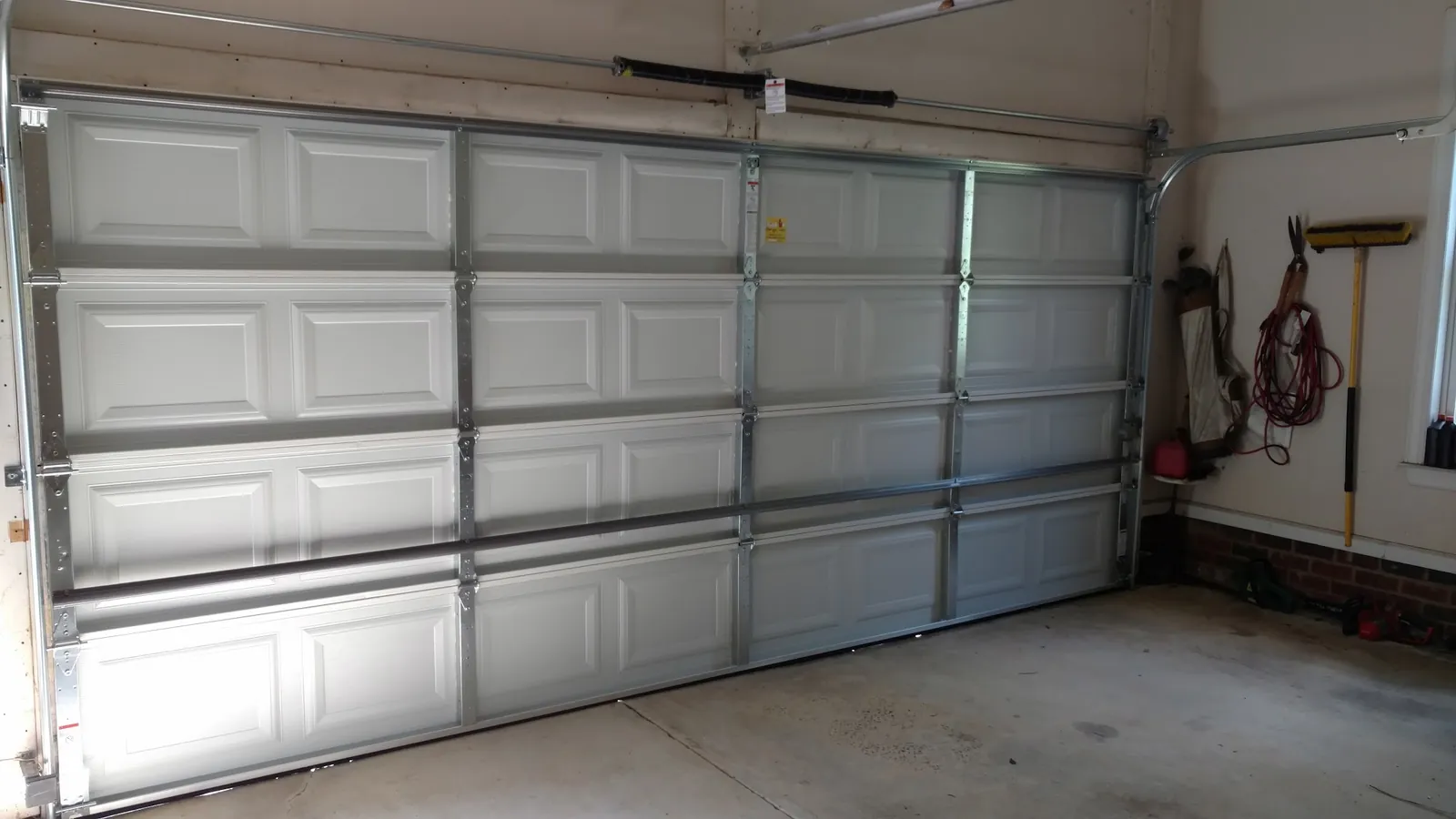
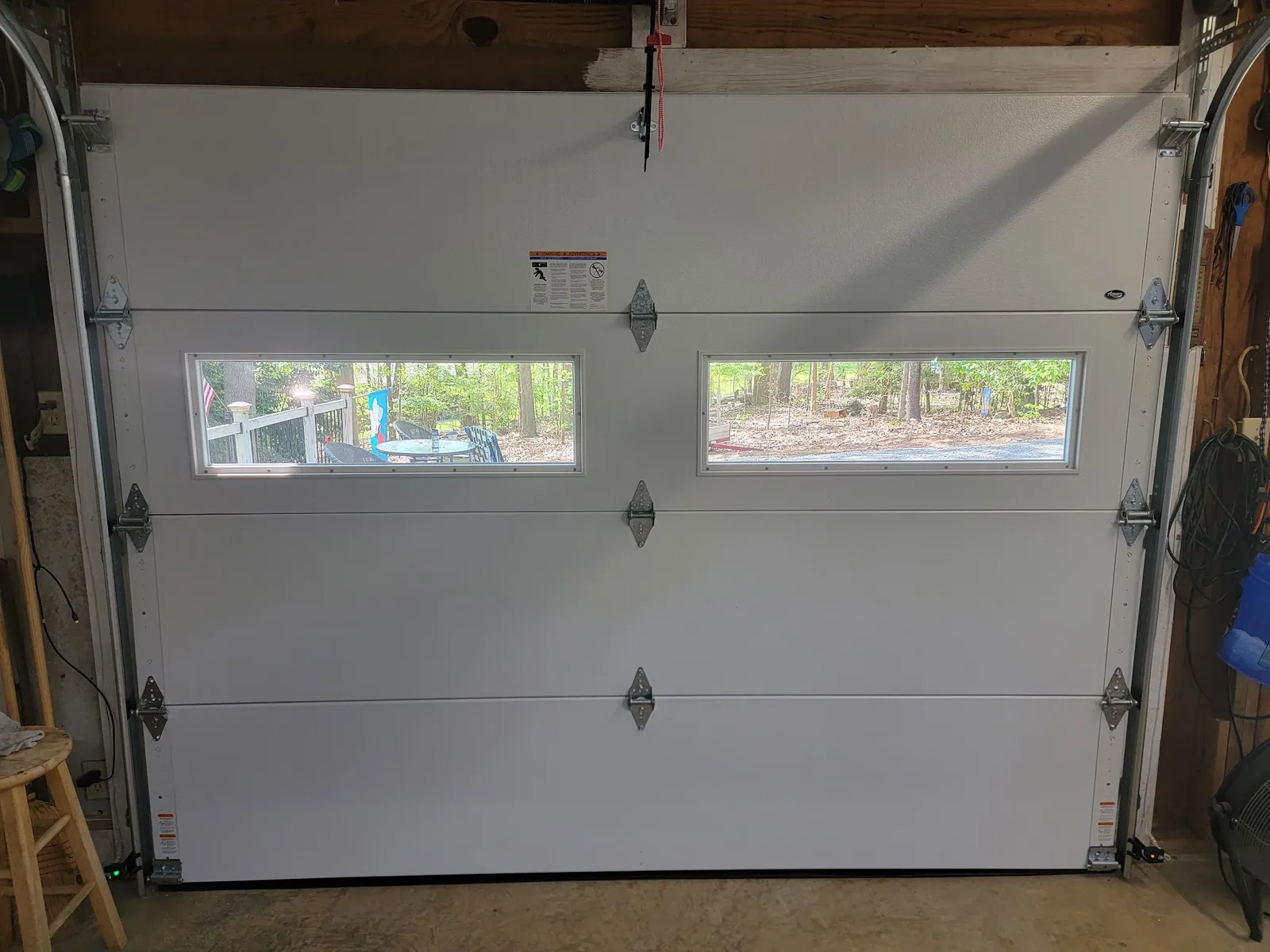
A bottom seal can only close a gap that the door’s bottom edge leaves. If the door itself is crooked, the gap shows up even with a new seal. Watch for these patterns:
- A gap on one side only. Often a stretched or frayed lift cable, a worn roller, or a track that has shifted. Read our posts on garage door cable repair vs replacement and what to do about a broken garage door cable.
- The door hangs crooked or looks lopsided. Check the tracks for bends or gaps. Our track repair signs guide shows what to look for.
- A new seal that still leaves a gap. The floor may be uneven, or the door is out of adjustment.
- Grinding, popping, or a door that sticks. Rollers, hinges, or springs are the likely cause. A noisy door is covered in why garage doors get noisy, and springs should only be handled by a trained technician.
Do not adjust springs, cables, or track brackets yourself. Those parts hold a lot of tension, and a safe repair is a job for a technician, not a weekend project.
Make It a Yearly Habit
A seal check takes a minute and pairs well with your fall maintenance routine. Our garage door maintenance checklist for Charlotte homeowners includes the annual seal check along with lubrication, hardware, and balance tests. Doing it before the first freeze keeps the cold, the leaves, and the mice out, and it catches a door that is drifting out of level before the gap gets worse.
“Mine were lopsided and needed sealing at the bottom. I called and got a quick idea as to what had to be done and they came out on our appointment on time, checked it out, and gave me a firm price.”
Michael H., 5-star Google review
Frequently asked questions
How do I know if my garage door bottom seal needs replacing?
Look for daylight under the closed door, a seal that is cracked, flattened, brittle, or torn, and signs of drafts, leaves, rainwater, or pests inside the garage. Close the door, turn off the garage light, and check from inside for light at the bottom edge.
Can I replace a garage door bottom seal myself?
Usually yes, if the door is otherwise in good shape. Most bottom seals slide out of a channel on the door’s bottom edge and a new one slides in. The job needs a tape measure, a utility knife, and silicone spray. An uneven gap, though, points to a problem with the door, not the seal.
What type of bottom seal does my garage door use?
Look at the bottom edge of the door. Most residential doors hold the seal in an aluminum retainer with one or two channels. Common seal shapes are T-end, bead end, and J-style, and the shape has to match the retainer. A threshold seal is a different product that mounts on the garage floor.
Why is there a gap under my garage door on only one side?
A gap on only one side usually means the door is not sitting level. Causes include a frayed or stretched cable, a worn roller, a bent track, or an uneven garage floor. Replacing the seal will not fix a crooked door.
Does a new bottom seal help keep mice and cold air out?
Yes. A seal that touches the floor along the whole width blocks drafts, rain, leaves, and small pests, and it helps the garage stay more comfortable in winter. A seal cannot overcome large gaps caused by a door that is out of level.
Not Sure If It Is the Seal or the Door? We Can Tell You in a Visit
Rise Up Garage Doors is LiftMaster Certified and has served Charlotte, Mint Hill, Matthews, and Concord since 2016. If you have a gap under the door and are not sure why, we will check the seal, the rollers, the cables, and the tracks, and tell you honestly what the door needs. Call (980) 240-2447 or request a free estimate online.