
Short answer: A belt drive garage door opener moves the door with a reinforced rubber belt and is the quieter, smoother choice, which makes it the better pick when a bedroom or living space sits above or beside the garage. A chain drive uses a metal chain, costs less, and is rugged and proven, but it is louder and needs occasional lubrication. Both lift a standard residential door reliably. The decision usually comes down to noise, budget, and where the garage sits in relation to the house.
When an opener finally gives out, most homeowners in Mint Hill, Charlotte, and Matthews discover there are more choices than they expected. Drive type is the first decision and the one that affects daily life the most. If you are ready to replace yours, our garage door opener installation page explains what we install and how the visit goes.
How the Two Drive Types Work
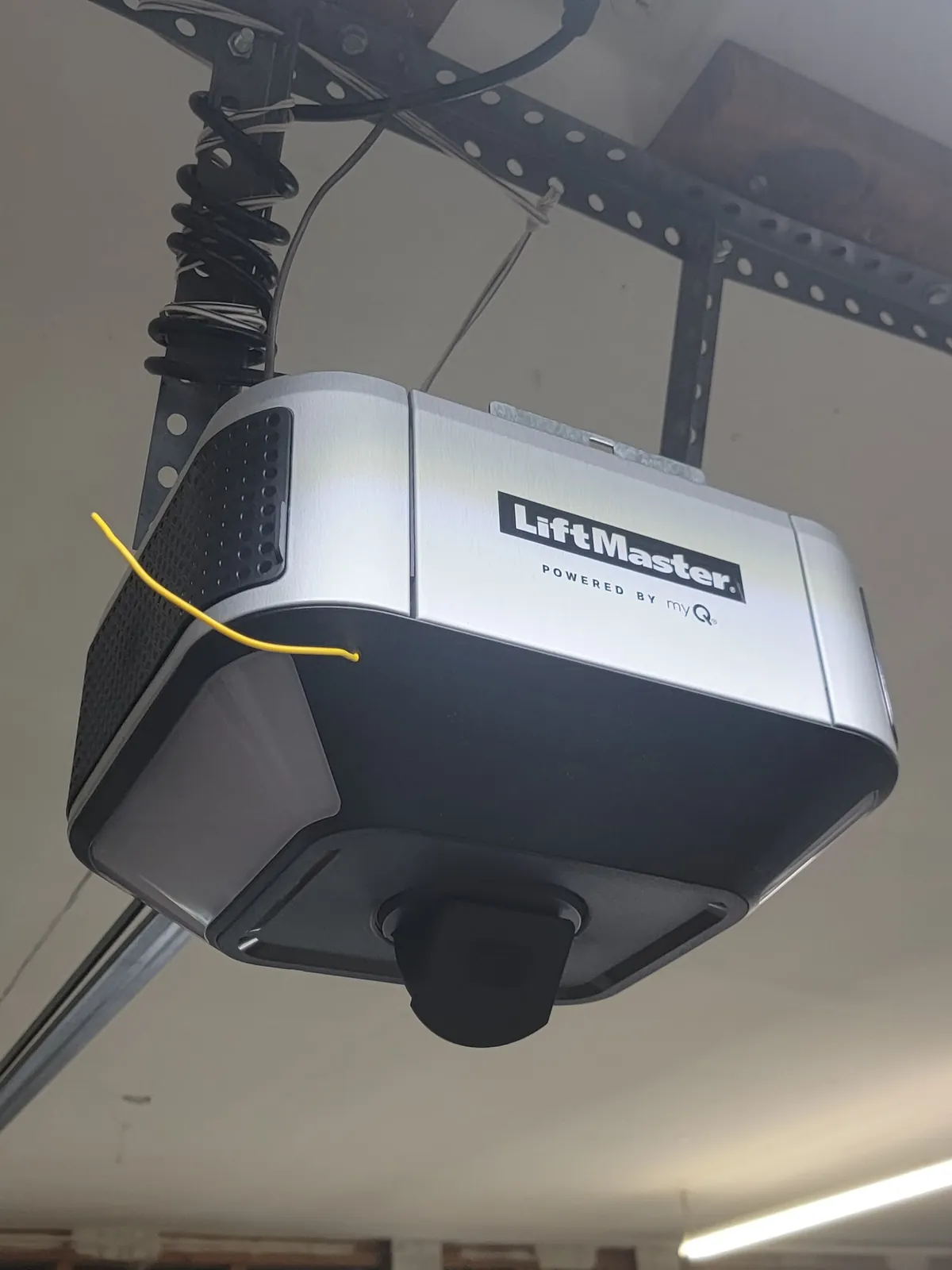
Belt and chain openers share the same basic design. A motor unit mounts to the ceiling near the center of the garage, a rail runs from the motor to the wall above the door, and a trolley travels along that rail, connected to the top section of the door by an arm. What moves the trolley is the difference. A chain drive uses a metal chain, similar to a heavy bicycle chain, looped around a sprocket on the motor. A belt drive uses a steel-reinforced rubber belt in the same loop. Everything else, the motor, the rail, the safety sensors, and the remotes, works the same way on both.
Noise: The Biggest Difference
A chain drive makes a metal-on-metal rattle every time it runs, and the vibration carries through the rail into the ceiling framing. In a detached garage, nobody cares. In an attached garage with a bedroom over it, a chain drive at six in the morning is a wake-up call for the whole house. A belt drive runs with a low hum, and that difference is the single most common reason homeowners choose a belt.
A noisy door is not always the opener, though. Worn rollers, dry hinges, and loose hardware make plenty of racket on their own, and a new belt drive will not fix them. If your door is loud, read our post on why garage doors get noisy before you blame the opener.
Durability and Maintenance
Chain drives have been around for decades and have earned a reputation for being tough. The chain can stretch over time and needs lubrication once in a while, and if it sags it can slap against the rail, so a technician should check the tension during a service visit. Belt drives have fewer metal parts rubbing together, so there is less to lubricate, and modern reinforced belts hold up well in normal residential use. Installed correctly on a balanced door, either one will outlast most of the other parts of the opener.
Cost
Chain drive openers are generally the less expensive option, and belt drives sit a step above. The gap is not enormous, and it narrows once you add the same features (Wi-Fi, battery backup, a camera) to either one. Pricing changes by model and season, so ask us for a current estimate on the specific unit you are considering.
Which Drive for Which Situation
- Bedroom, nursery, office, or living room above or beside the garage: belt drive.
- Detached garage or workshop: chain drive is a sensible budget pick, though a belt is still nice to have.
- Heavy door (insulated steel, wood, or an oversized double door): either works when the motor is sized correctly. Some homeowners assume a chain is required for heavy doors, but a properly rated belt drive handles them.
- Strict budget and nobody sleeps near the garage: chain drive.
The Other Types You May Hear About
You may run into two other types. A screw drive uses a long threaded rod instead of a chain or belt. It has fewer moving parts but is louder than a belt and less common on new installs today. A wall-mount (jackshaft) opener mounts beside the door and turns the torsion shaft directly, with no rail overhead. It is very quiet and frees up ceiling space, but it requires a torsion spring setup, a door in good condition, and a bigger budget.
Horsepower and Motor Type, Explained Simply
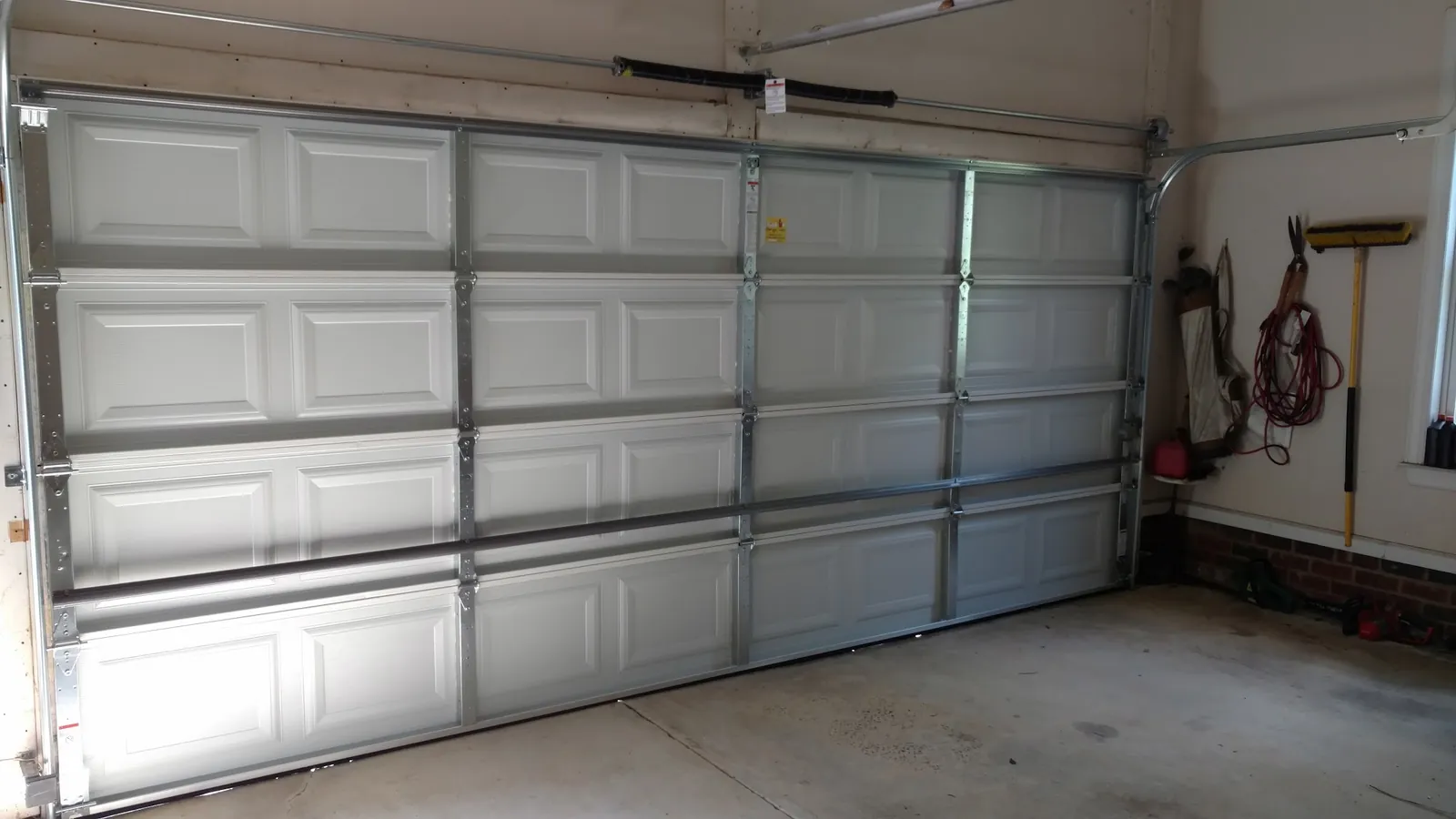
Opener motors are rated by power, and the right rating depends on the door. A light single-car door needs less than a heavy insulated double door. More power than you need does not hurt, but it is money you did not have to spend. More important than the number on the box is the door’s balance. An opener is designed to guide a door that the springs are already lifting, not to haul a heavy, unbalanced door on its own. If the springs are worn, even the strongest opener will struggle and wear out early. That is why a good installer checks the door balance before hanging a new opener, and why a “dead opener” sometimes turns out to be a spring problem. Our guide on whether to repair or replace your opener covers that balance test.
You will also see AC and DC motors. DC units tend to run quieter, start and stop more softly, and are the ones that typically support battery backup.
Features Worth Having on a New Opener
- Battery backup. Summer storms in the Charlotte area take power down regularly. A backup lets you get the car out during an outage without pulling the release cord.
- Wi-Fi and app control. Check whether the door is closed from your phone, close it remotely, and get alerts when it opens. Handy for the “did I close the garage?” moment on the highway.
- Rolling code security. Standard on modern openers. The remote signal changes with every press, so it cannot be captured and replayed.
- Safety sensors. Standard on every new opener. If your current opener has no photo-eye sensors near the floor, replacing it is a safety upgrade, not a luxury.
- Keypad and extra remotes. A wireless keypad outside the door is the feature families end up using most.
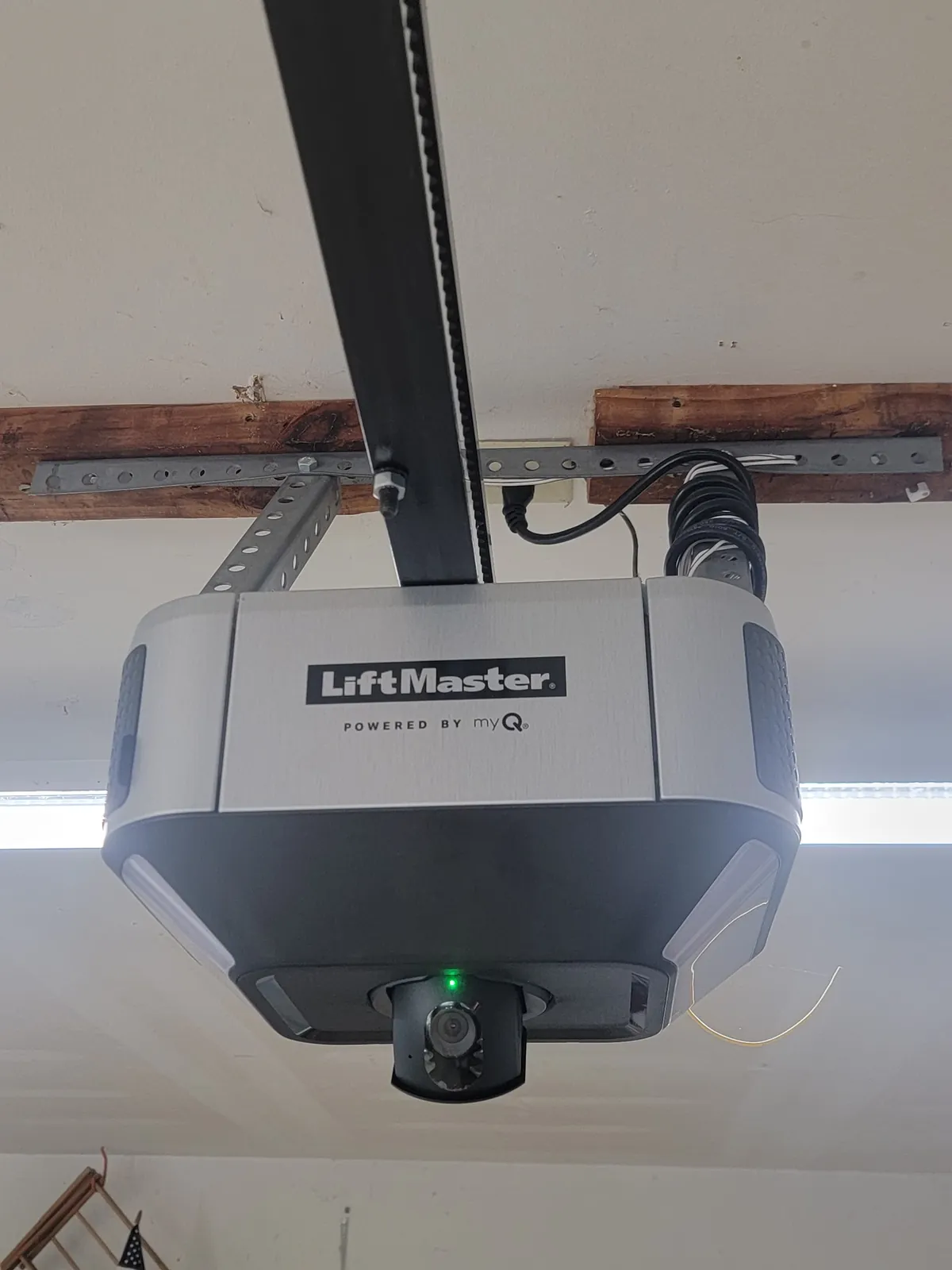
- Built-in camera or lighting. Nice to have, not essential.
Should You Replace the Opener or Just Repair It?
If the motor and logic board are healthy and the problem is a stripped gear, a sensor, or a remote, garage door opener repair is often the better spend. If the unit is old, lacks safety sensors, uses a fixed-code remote, or has a failing motor, a new belt or chain drive is the right move. We will tell you which applies before you buy anything.
“Adam just replaced my almost 20 year old opener and provided excellent service! I have recommended Rise Up to other friends and they have been extremely pleased as well.”
Lisa G., 5-star Google review
Frequently asked questions
Is a belt drive garage door opener better than a chain drive?
Better for noise and smoothness, yes. A belt drive is the right choice when living space is near the garage. A chain drive is less expensive and just as capable of lifting the door, so it is the better value for a detached or rarely used garage.
Can a belt drive opener lift a heavy garage door?
Yes, as long as the motor is rated for the door’s weight and the door is balanced by its springs. The drive type does not limit lifting ability. Motor rating and door balance do.
Do chain drive openers need maintenance?
Some. The chain should be lubricated periodically with a product made for garage doors, and its tension should be checked during a service visit so it does not sag and hit the rail. Belt drives need less attention.
What is the quietest type of garage door opener?
Belt drive and wall-mount (jackshaft) openers with DC motors are the quietest options for most homes. Worn rollers and hinges can make any opener sound loud, so have the door checked too.
Get a Straight Recommendation From a LiftMaster Certified Team
Rise Up Garage Doors is LiftMaster Certified and has installed and serviced openers across Mint Hill, Charlotte, Matthews, Concord, and the surrounding area since 2016. We will look at your door, your garage, and how you use it, then recommend a drive type and feature set that fits, without steering you into a unit you do not need. Call (980) 240-2447 or request a free estimate online.