
Short answer: An insulated garage door has a layer of foam behind or between its steel skins, which makes it stiffer, quieter, and better at holding a steadier temperature in the garage. A non-insulated door is a single layer of steel, costs less, and works fine on a detached garage used only for parking. For most attached garages in the Charlotte area, especially with a bedroom above or beside the garage, an insulated door is the better long-term choice.
The first question most homeowners in Charlotte, Mint Hill, and Matthews ask about a new door is style. The second, once a quote comes back with two different numbers, is whether insulation is worth it. The answer depends on how your garage is built and how you use it. If you already know you need a new door, our garage door installation page covers styles, materials, and how the process works.
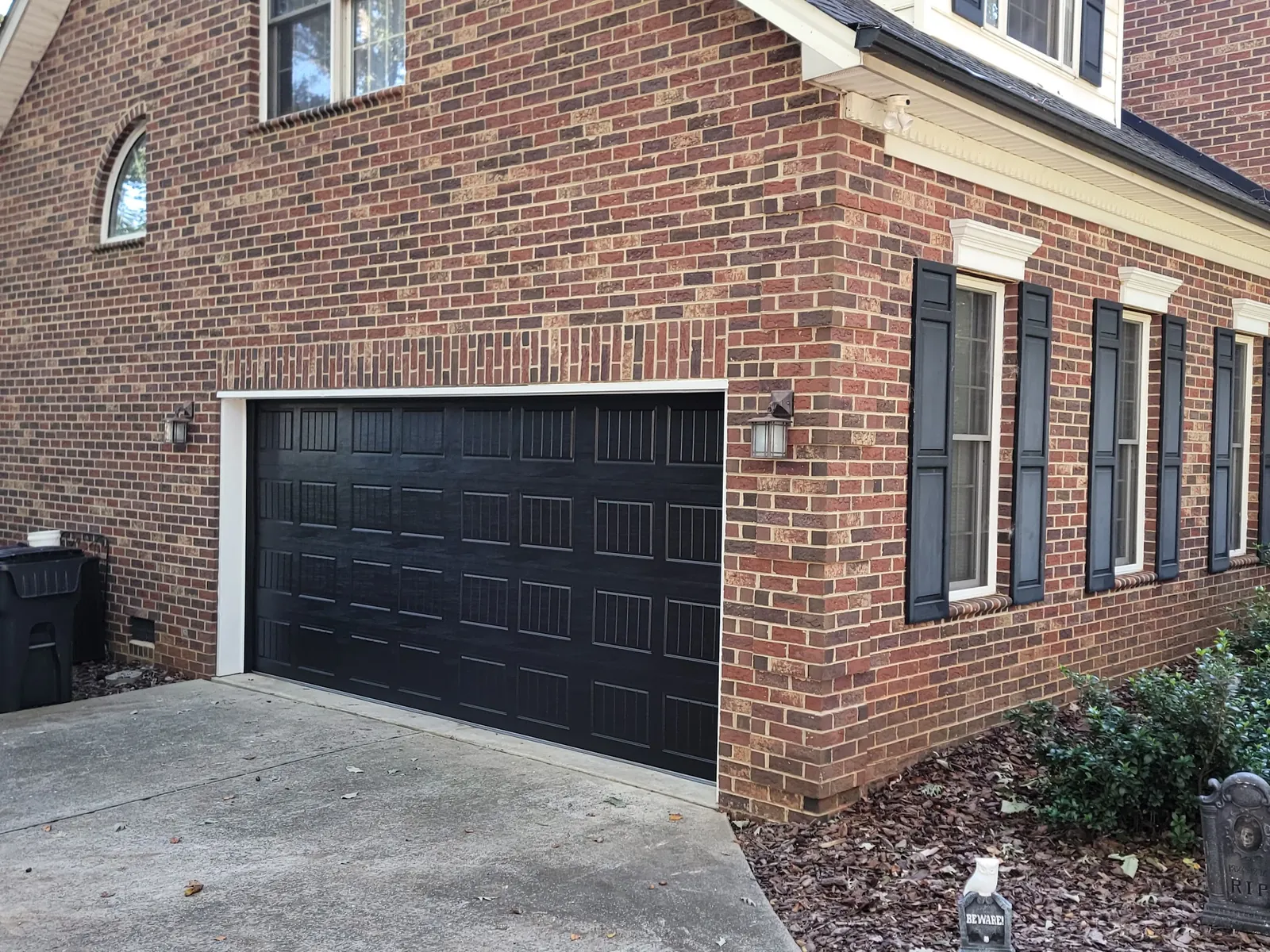
What “Insulated” Really Means on a Garage Door
Residential garage doors come in three basic constructions.
- Single layer. One sheet of steel formed into panels, with no insulation and no inner backing. This is the standard non-insulated door: light, inexpensive, bare steel and struts on the inside.
- Double layer. A steel outer skin with insulation bonded to the back, usually covered by a thin vinyl or steel backing. Better rigidity, quieter, cleaner from inside.
- Triple layer (sandwich). Insulation sealed between two steel skins. The stiffest, quietest, and most durable construction, and the one most people mean when they say “insulated door.”
Two insulation materials are common. Polystyrene is a rigid foam sheet fitted into the panel. Polyurethane is foamed in place and bonds to both skins. For the same thickness, polyurethane generally insulates better and adds more stiffness, which is why it shows up on higher-end sandwich doors.
R-Value, Explained Without the Math
R-value measures how well a material resists heat flow. A higher number means more resistance. Manufacturers publish R-values for their insulated models, and the numbers vary widely by construction and thickness. Two things to know before you compare them. First, the published number usually describes the insulation at the center of a panel, not the whole door with its seams, windows, and edge gaps, so the installed door performs below the sticker. Second, R-value only describes the door. If the garage has a leaky side door, an uninsulated ceiling, or worn weatherstripping, a high R-value door will not change much on its own. Treat the number as a way to rank doors against each other, and read it off the manufacturer’s spec sheet for the exact model you are considering.
What an Insulated Door Does in a Carolina Climate
Charlotte summers are long, hot, and humid, and the garage is usually the hottest room on the property because the door faces the sun for hours. An insulated door slows that heat coming through. The garage still warms up, but it does not spike as hard in the afternoon. In winter, our cold snaps are short but real, and an insulated door keeps the garage from dropping as far below house temperature. Here is where that matters most:
- A bedroom or bonus room over the garage. A cooler garage below means a more comfortable room above and less work for your HVAC.
- Living space sharing a wall with the garage. The garage acts as a buffer, and a buffer closer to room temperature helps.
- A garage used as a workshop, gym, or laundry space.
- Anything stored that does not like heat. Paint, a second refrigerator, and tools all do better in a garage that is not baking.
One honest limit: insulation does not control humidity. A sealed, insulated garage in a Charlotte August will still feel muggy, and the fix for that is ventilation or a dehumidifier, not a thicker door.
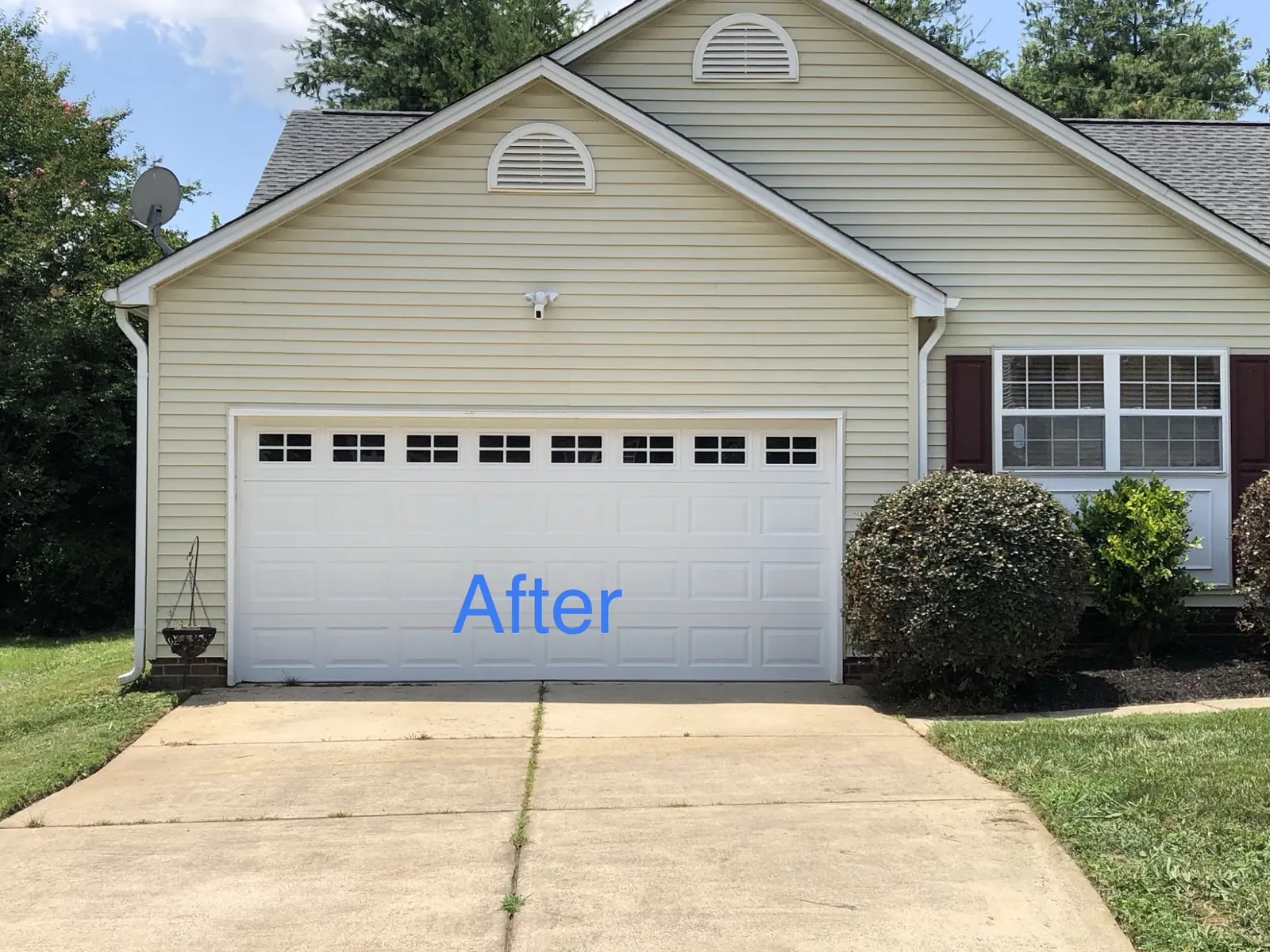
The Benefits That Have Nothing to Do With Temperature
Homeowners often buy an insulated door for comfort and end up most pleased by the side effects.
- Quieter operation. A sandwich panel does not rattle and ring the way a single sheet of steel does. If your current door is loud, our post on why garage doors get noisy explains what else may be going on.
- Dent resistance. A foam-backed panel is much harder to dent with a basketball or a bike handlebar. Single-layer doors show every impact.
- Stiffer panels. Insulated sections flex less, which keeps the door tracking straight and eases wear on rollers, hinges, and the opener.
When a Non-Insulated Door Is the Right Call
Insulation is not always worth the money, and we will say so when it is not.
- The garage is detached and used only for parking or for storing things that do not mind heat.
- There is no living space above or beside the garage, and the garage ceiling and walls are not insulated either.
- You are replacing one door on a two-door garage and want it to match the other exactly.
A single-layer steel door from a reputable manufacturer is still a solid door that will run reliably for years with normal maintenance. It just will not do much for the temperature of the garage.
Material Matters Too: Steel, Wood, and the Rest
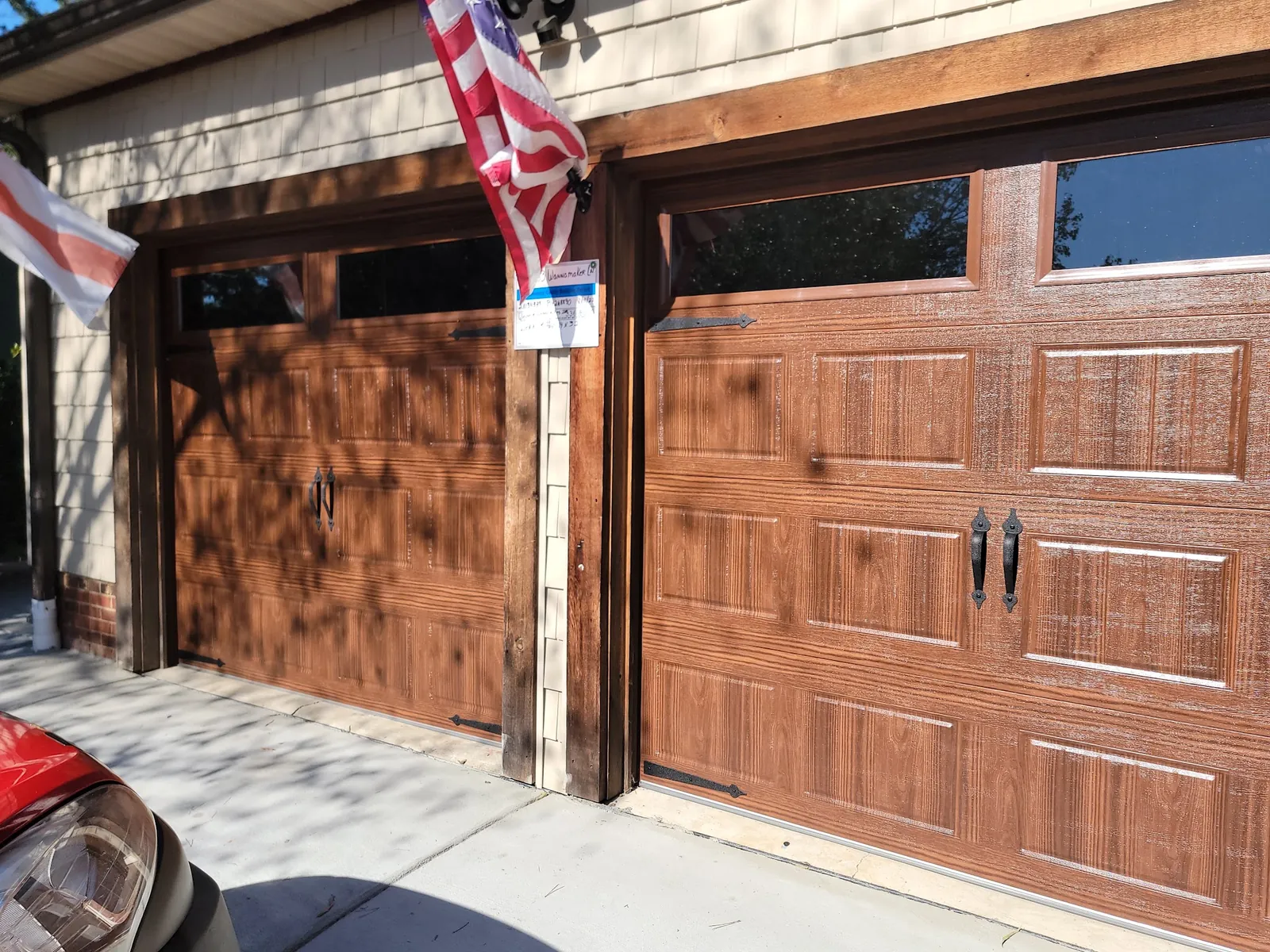
Most residential doors installed around Charlotte are steel, because steel handles humidity well, needs little upkeep, and comes in nearly every style, including woodgrain finishes that look like stained wood from the street. Real wood doors are beautiful and heavy, and in our climate they need regular sealing or painting to keep moisture from swelling and warping the panels. Whatever the material, ask whether the specific model is single, double, or triple layer. The construction, not the finish, determines insulation.
Weight, Springs, and the Opener: The Part People Forget
An insulated door is heavier than a single-layer door of the same size. That changes the spring sizing, and it can change the opener you need. A proper installation includes springs matched to the new door’s weight and a check that the existing opener can handle it. If the old door’s panels are rusting, the sections are cracked, or it is an older style with no safety features, garage door replacement usually makes more sense than another round of repairs. For a sense of what goes into the numbers, see what affects the cost of a new garage door in Charlotte.
How to Decide in Three Questions
- Is the garage attached, with a room above or beside it that people use? If yes, insulated.
- Do you spend time in the garage, store anything that dislikes heat, or worry about noise under a bedroom? If yes, insulated.
- Is the garage detached, used only for parking, and uninsulated everywhere else? If yes, a single-layer door is a reasonable choice.
“Adam was prompt for his appointment and gave us several different options in doors and openers.”
Marcia W., 5-star Google review
Frequently asked questions
Are insulated garage doors worth it in Charlotte?
For an attached garage, especially one with a room above or next to it, usually yes. The door runs quieter, resists dents, and keeps the garage from spiking in summer heat. For a detached garage used only for parking, a non-insulated door is often the sensible buy.
What is a good R-value for a garage door?
It depends on the door’s construction and how the garage is used. Higher numbers mean more resistance to heat flow. Compare published R-values across the models you are considering rather than hunting for one magic number, and remember the installed door performs below the published figure.
Does an insulated garage door lower my energy bill?
It can reduce the load on your HVAC when there is living space above or beside the garage. The size of the effect depends on your home, so we do not promise a specific savings figure.
Is an insulated door heavier, and does that matter?
Yes, and yes. The extra weight has to be matched with the correct springs, and in some cases a stronger opener. A professional installation accounts for both.
Talk It Through With a Local Installer
Rise Up Garage Doors installs residential doors across Charlotte, Mint Hill, Matthews, Concord, Monroe, and the surrounding area. We will look at how your garage is built, show you the construction options side by side, and tell you plainly which one fits your home and budget, with no push toward the expensive door. Call (980) 240-2447 or request a free estimate online.