
Short answer: When a garage door won’t open or close, the cause is almost always one of eight things: no power, a lock setting or dead remote, blocked safety sensors, a pulled emergency release, a broken spring, a cable off its drum, a track or roller problem, or a worn opener. Check the simple items first. If the door is crooked, feels very heavy, or you heard a loud bang, stop and call a technician, because springs and cables are under high tension.
You press the button, the opener clicks or hums, and nothing moves. Or the door starts down, stops a foot from the floor, and heads back up. Half of these you can rule out in five minutes without tools. The other half call for garage door repair from a trained tech.
Start Here: Four Safe Checks That Take Five Minutes
1. The opener has no power
A tripped GFCI, a tripped breaker, or a plug that worked loose will leave the opener completely silent. If the light on the motor unit is dark, reset any GFCI outlet in the garage, check the breaker panel, and make sure the plug is seated. Summer thunderstorms around Charlotte knock power around often enough that this is worth checking first.
2. The lock feature is on, or the remote is the problem
Most wall buttons have a lock or vacation setting. When it is on, the wall button works but the remotes do not. If the door opens from the wall and not from the car, hold the lock button for a few seconds to turn it off. If the remote does nothing at all, or only works when you are right under the opener, try a fresh battery. If every remote is still dead, the receiver may need service.
3. The safety sensors are blocked, dirty, or out of line
This is the number one reason a garage door won’t close all the way. The two small sensors near the floor on each side of the opening send an invisible beam across the doorway. If anything breaks that beam, even a trash can or a bike tire, the door refuses to close and the opener light usually blinks. Each sensor has an indicator light, and both should be lit steady. If one is off or flickering, wipe the lens, clear anything in the way, and check whether the bracket got bumped. If the lights will not stay steady no matter what you do, the wiring or the sensor itself may have failed.
4. The emergency release was pulled
The red cord hanging from the opener rail disconnects the door from the opener for outages, and it also gets snagged by roof racks and curious kids. When it has been pulled, the opener runs but the trolley slides along the rail without taking the door with it. Most openers reconnect when you pull the cord toward the door or run the opener until the trolley catches. Check your owner’s manual for the exact steps.
Now the Causes That Need a Technician
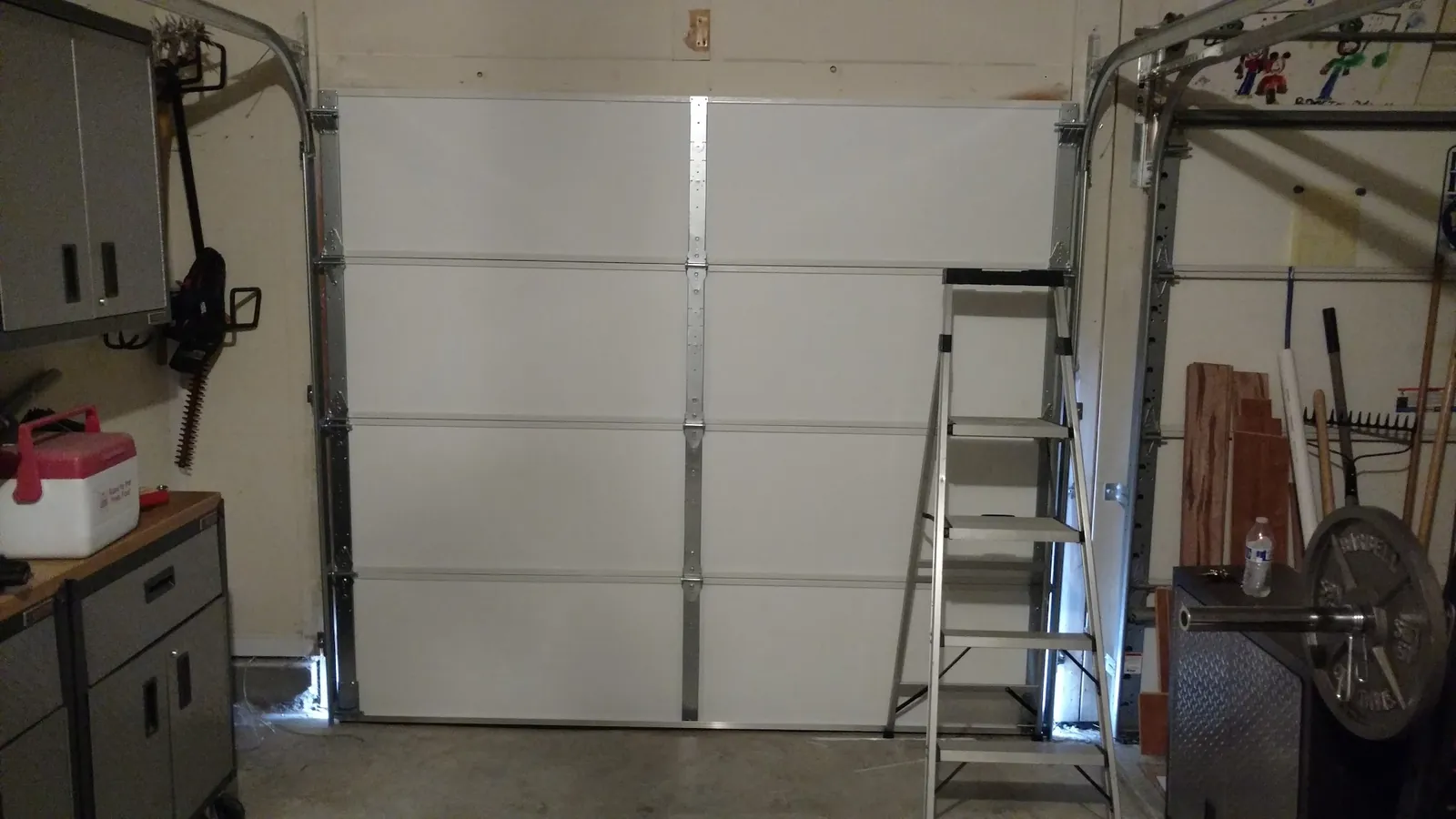
If those checks did not solve it, the problem is probably mechanical. These next four are the ones we see most in Charlotte, Mint Hill, and Matthews, and they share one warning: do not force the door, and do not touch the springs or cables. Both hold stored tension and should only be handled by a trained technician.
5. A broken torsion spring
Springs do the actual lifting. The opener only guides the door. When a torsion spring breaks, the opener has to lift the full weight of the door by itself, which it cannot do. The classic signs are a loud bang from the garage, a door that rises a few inches and stops, a door that feels extremely heavy by hand, and a visible gap in the coil above the door. If you notice any of these, leave the door alone and schedule garage door spring repair. Our post on spring repair warning signs covers how to spot a failing spring early.
6. A cable that slipped off the drum or frayed through
Lift cables run from the bottom corners of the door up to drums on the spring shaft. When a cable comes off its drum or snaps, one side drops and the door hangs crooked, often jammed partway. This is a garage door stuck halfway in its most obvious form, and it is a stop-everything situation. The remaining cable and the spring are still under load, and the door can shift without warning. Call for garage door cable repair and keep people and vehicles away from the door until it is fixed. See also: what to do about a broken garage door cable.
7. A bent track, worn rollers, or something in the track
A bumper tap from a car can bend a vertical track enough to bind the rollers. Worn rollers wobble, grind, and catch at the curve. Either problem can leave the door stuck partway up or make it shudder and reverse. Look along the tracks for dents or debris, but do not try to hammer a bent track back into shape. Our guide to garage door track repair signs covers what to look for.
8. The opener itself, or its travel settings
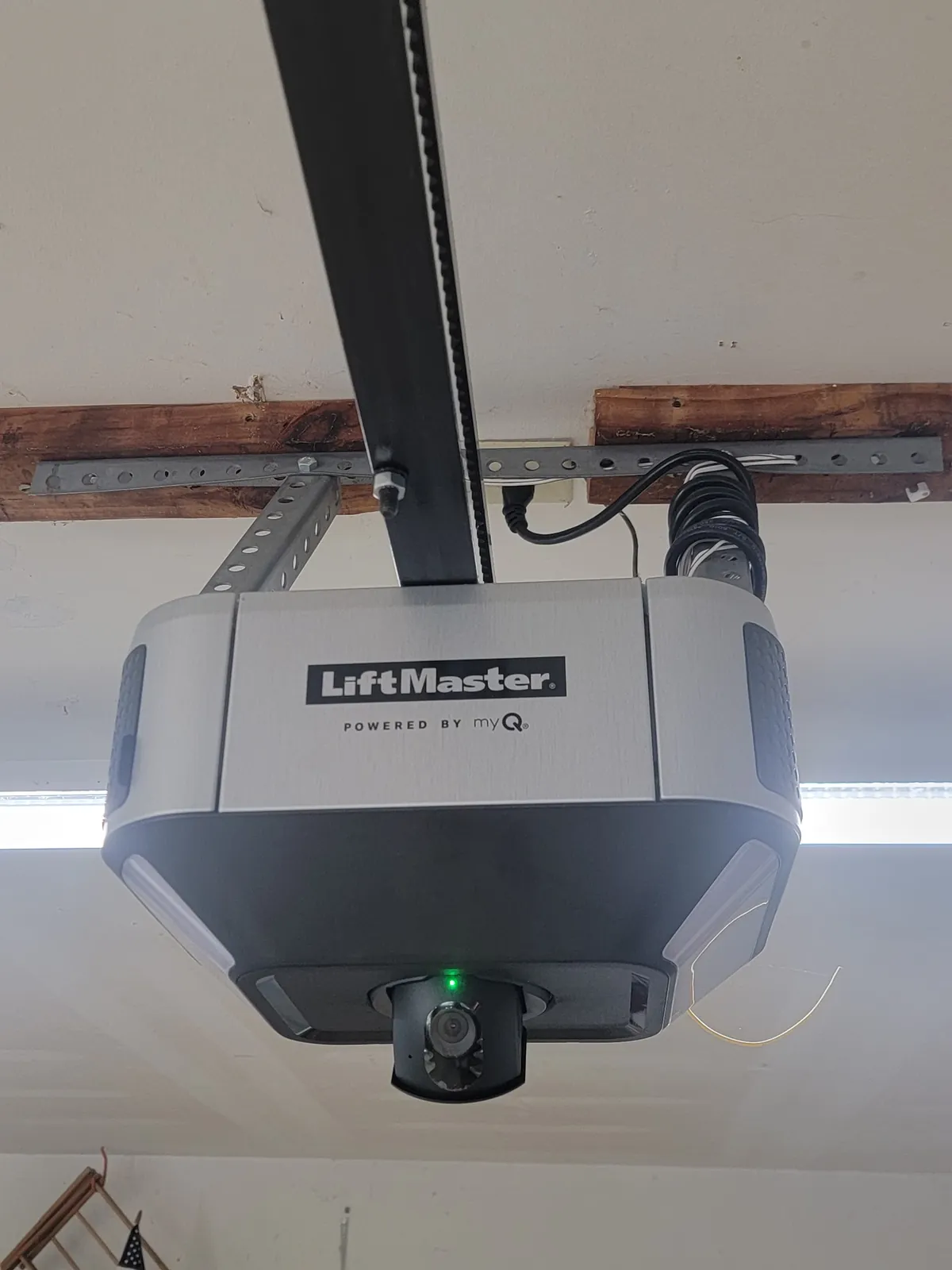
When the door is balanced and the sensors are fine but the garage door opener is not working right, the problem is inside the unit. A motor that hums without moving the trolley usually means a stripped drive gear. A door that touches the floor and reverses, or stops short of fully open, often means the travel limits or force settings have drifted. These are normal garage door opener repair jobs, and the fix is often a part or an adjustment rather than a new opener. If you have a LiftMaster, our LiftMaster troubleshooting post walks through the blink codes.
The Test That Tells You If It Is the Door or the Opener
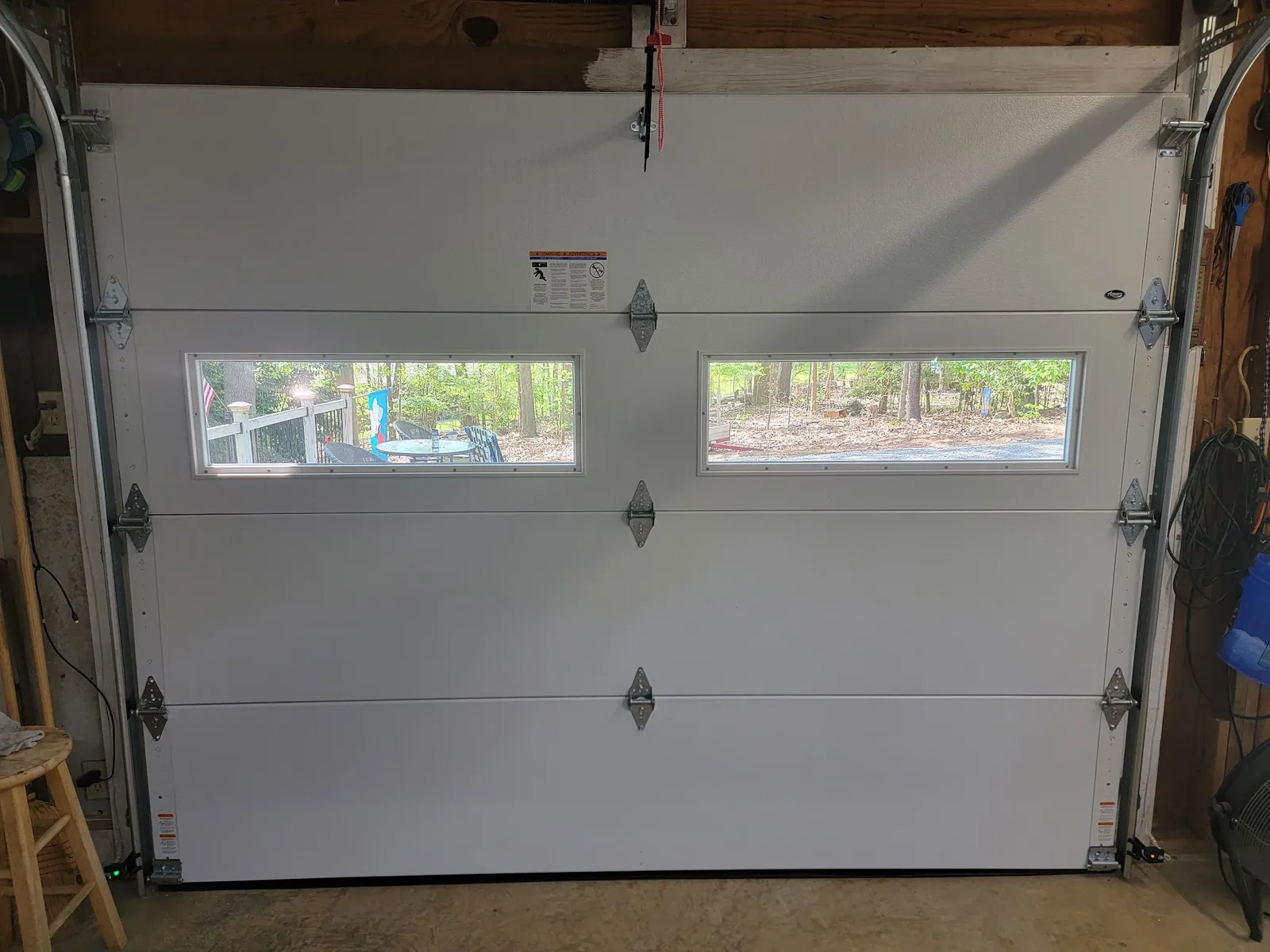
With the door fully closed, pull the emergency release, then lift the door by hand. A healthy door lifts smoothly and stays put at about waist height when you let go. If it is very heavy, lifts crooked, or will not move, the problem is in the door hardware, and a new opener would not fix it. If the door moves easily by hand but not from the opener, the opener is the problem. One caution: if you already suspect a broken spring or the door is hanging crooked, skip this test. A door with a failed spring can drop hard.
While you wait for a tech, do not keep pressing the button, and do not drive under or let kids play near a door that is crooked or stopped partway.
“We had two damaged garage doors – one that wouldn’t even open, and one we were afraid to open because of all the popping. Rise Up came out to our home on time, assessed the damage, and fixed the problems right then and there.”
Josh D., 5-star Google review
Frequently asked questions
Why does my garage door go down a little and then come back up?
Most often the safety sensors are blocked, dirty, or out of alignment. If the sensors are fine, the opener’s force or travel settings may need adjustment.
Can I open my garage door manually if the opener is dead?
Yes, if the door is balanced. Pull the red emergency release cord with the door closed, then lift. If the door feels extremely heavy or will not budge, stop. That points to a broken spring.
Why does my garage door open by itself?
Usually a stuck wall button, a remote with a button pressed down in a glovebox or bag, or a wiring fault. If it happens more than once, have the opener checked.
How do I know if the spring is broken?
A loud bang, a door that opens a few inches and stops, a door that feels far heavier than usual, or a visible gap in the coil above the door. Do not use the door until a technician has inspected it.
Get It Fixed by a Local Tech Who Will Tell You the Truth
Rise Up Garage Doors has repaired doors across Mint Hill, Charlotte, Matthews, Concord, and the surrounding area since 2016. We diagnose the whole door before recommending anything, so you are never sold a new opener when a sensor adjustment would do. Call (980) 240-2447 or reach out online, Monday through Saturday.