
Short answer: Most noisy garage doors come down to one of seven things: worn rollers, loose hardware, an unlubricated track and hinges, a chain-drive opener (which is naturally louder than belt or screw drive), a worn opener gear, springs that need lubrication, or a door slightly out of balance. Most of these are simple fixes. A few, like spring or balance issues, are worth having a professional look at rather than DIY.
A garage door that used to open quietly and now sounds like a small construction project is not just annoying. Noise is usually the door telling you something has changed, and most of the time it is fixable in under an hour.
1. Loose hardware
Every cycle vibrates the door slightly, and over months and years that works nuts and bolts loose on the hinges, brackets, and track. This is the single most common cause of a rattly, noisy door. Go along the entire door and tighten anything that has backed out, using a wrench rather than overtightening with a power driver.
2. Worn rollers
Nylon rollers wear down and develop flat spots over years of use, and a worn roller thumps or squeaks with every rotation instead of rolling smoothly. If tightening hardware does not quiet things down, check the rollers next. Nylon rollers are also quieter than steel ones by design, so replacing old steel rollers with nylon is a common upgrade for noise alone.
3. Dry track, hinges, and springs
Metal moving against metal with no lubrication is loud. Use a proper garage door lubricant, not household oil or WD-40, on the hinges, rollers, and springs a couple of times a year. Do not lubricate the inside of the track itself, the rollers are meant to roll along it, not slide, and a greasy track just collects grit.
4. The type of opener you have
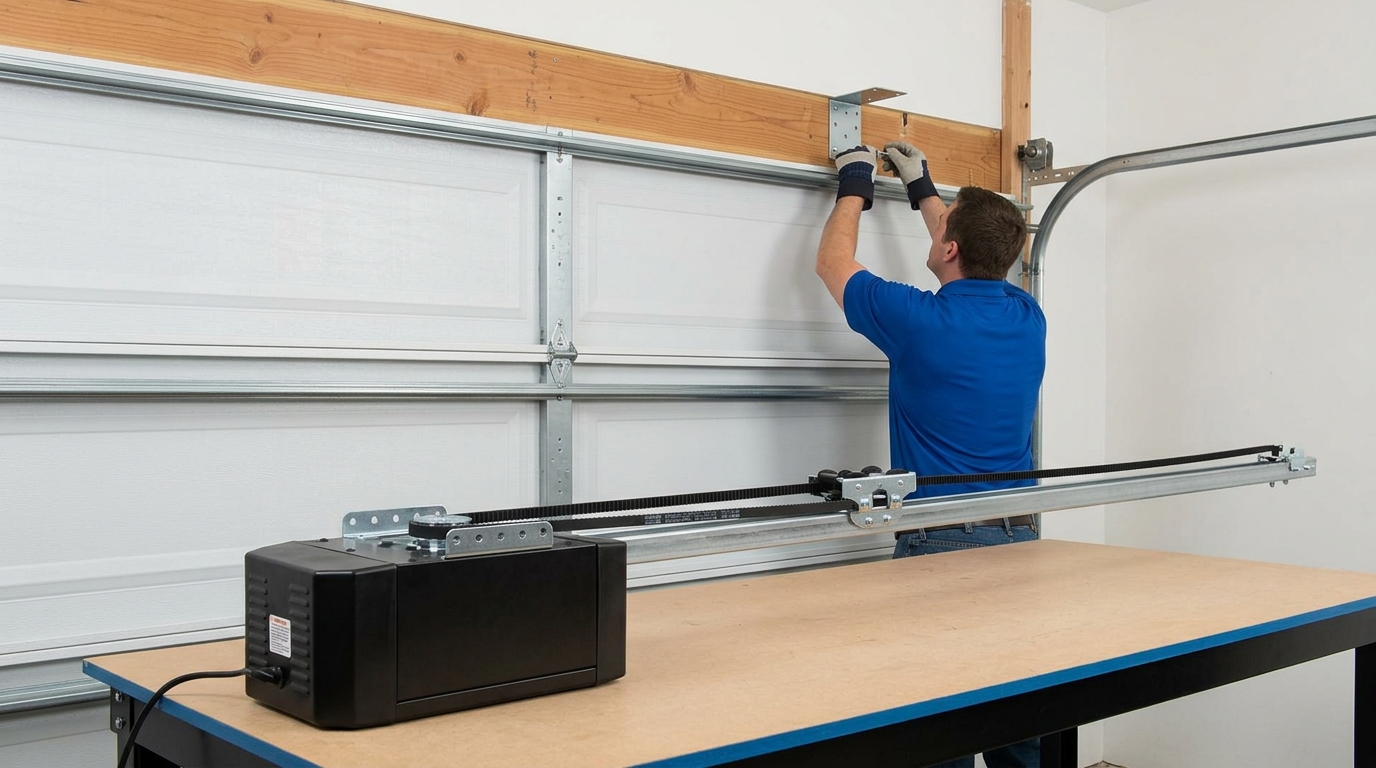
Chain-drive openers use a metal chain to pull the trolley along the rail, and that mechanical contact is simply louder than the alternatives, no matter how well it is maintained. Belt-drive openers use a rubber belt instead and run noticeably quieter, which is why they are common in homes with a bedroom above or next to the garage. If your opener has always been loud since day one, that is more likely the drive type than a problem to fix.
5. A worn or stripped opener gear
A grinding sound from the opener itself, especially if the door also seems to move slower than it used to, often points to a nylon gear inside the motor housing wearing down. This is a repair, not something lubrication will solve.
6. Springs that need attention
Torsion springs can develop a metallic scraping sound as the coils rub against each other or the shaft. A light spray of garage door lubricant on the spring coils usually quiets this down. Springs under visible strain, rust, or gaps in the coil are a different issue and worth a professional look rather than more lubricant.
7. A door out of balance
If the noise comes with the door feeling heavy to lift by hand, or closing unevenly, the spring tension may no longer match the door’s actual weight. An unbalanced door strains the opener and the track with every cycle, which shows up as noise long before it shows up as a failure. Balance adjustments involve spring tension and are not a DIY fix.
Frequently asked questions
Is a noisy garage door dangerous?
Not usually on its own, but noise is often the earliest sign of wear that can eventually become a real problem, like a failing roller or an unbalanced door. Addressing it early is cheaper and safer than waiting for it to become something bigger.
What is the quietest type of garage door opener?
Belt-drive openers are generally the quietest, followed by screw-drive, with chain-drive being the loudest of the three. If noise is a priority and you are due for a new opener anyway, belt drive is worth considering.
How often should I lubricate my garage door?
Twice a year is a reasonable baseline for most homes, more often if the door gets heavy daily use. Use a lubricant made for garage doors on the rollers, hinges, and springs, not the track channel itself.
Still noisy after trying the basics?
If you have tightened the hardware and lubricated everything and the door is still loud, something more specific is going on, and we can track it down.
Call Rise Up Garage Doors at (980) 240-2447 or request a free estimate. BBB A+ rated, LiftMaster Certified, and a Nextdoor Neighborhood Favorite, serving Mint Hill, Charlotte, Matthews, Concord, Monroe, Pineville, Ballantyne, Weddington, Indian Trail, Locust and Lake Wylie SC since 2016.
Our garage door repair team handles noise complaints regularly, and if a spring is the culprit, see our spring repair page for what that involves.